

Your first session
Starting at a new outpatient haemodialysis clinic can feel unfamiliar, even when dialysis itself is already part of your routine. This guide explains what usually happens on your first day and how to prepare in practical terms.
Before your first visit
Your first session is usually arranged after referral from your doctor or renal unit. Before the day, the clinic will need the referral information and the details required to book you into the correct shift. Morning, afternoon and evening sessions are scheduled in advance, so it helps to confirm transport plans early, especially if you are travelling across Bedfordview or from other parts of the East Rand.
If anything about your booking, referral paperwork or account details is still outstanding, sort that out before travelling where possible. This can make arrival easier and may reduce delays at reception. If you are unwell on the day, or if there is a sudden change in your condition, emergencies should go to the nearest emergency unit. Your renal team decides on treatment and any changes to it.
- Check the date and shift time for your first session.
- Make sure your referral has been sent by your doctor or renal unit.
- Keep your identity document and medical-aid information, if applicable, ready.
- Plan your lift, e-hailing or family transport ahead of time.
- Allow extra travel time for Bedfordview traffic, security access and parking.
What to bring with you
Bring the basics you need for a comfortable session and for admission checks. Pack lightly but do not arrive without your important documents. If you already receive dialysis elsewhere and are attending by arrangement, bring any treatment information your renal unit asked you to carry with you. It is also sensible to keep personal items in one small bag so that nothing is misplaced during the shift change.
Many patients also prepare for load-shedding disruptions outside the clinic, such as traffic signals being out or lifts not working in nearby buildings, so phone battery and transport timing matter a bit more than usual.
- Identity document or other accepted identification.
- Medical-aid card and authorisation details, if relevant.
- Referral notes or documents from your doctor or renal unit, if you were asked to bring them.
- Your usual medicines or a current medicine list, if your renal team told you to keep it with you.
- A jersey or light blanket, as some patients prefer extra warmth during treatment.
- A charged cellphone, earphones, a book or other quiet item for the session.
- A small snack only if your renal team has said this is suitable for you.
Arrival and check-in
On arrival, you will check in and the team will confirm your referral and session booking. First-day administration may take a little longer than future visits because details need to be verified carefully. That can include confirming your contact information, account information and the doctor or renal unit responsible for your ongoing care.
Once the paperwork side is in order, a registered renal nurse will guide the next steps. The nurse may ask general questions about your current dialysis routine and recent care so that the clinic record matches the referral information. If something does not line up the team will usually contact the referring doctor or renal unit for clarification rather than guessing, which helps avoid mix-ups.
If you arrive very early you may be asked to wait until the area is ready for your shift. Shift changes are a normal part of an outpatient clinic day, and a short wait can happen from time to time. Bring something small to keep you occupied.
Getting settled for the session
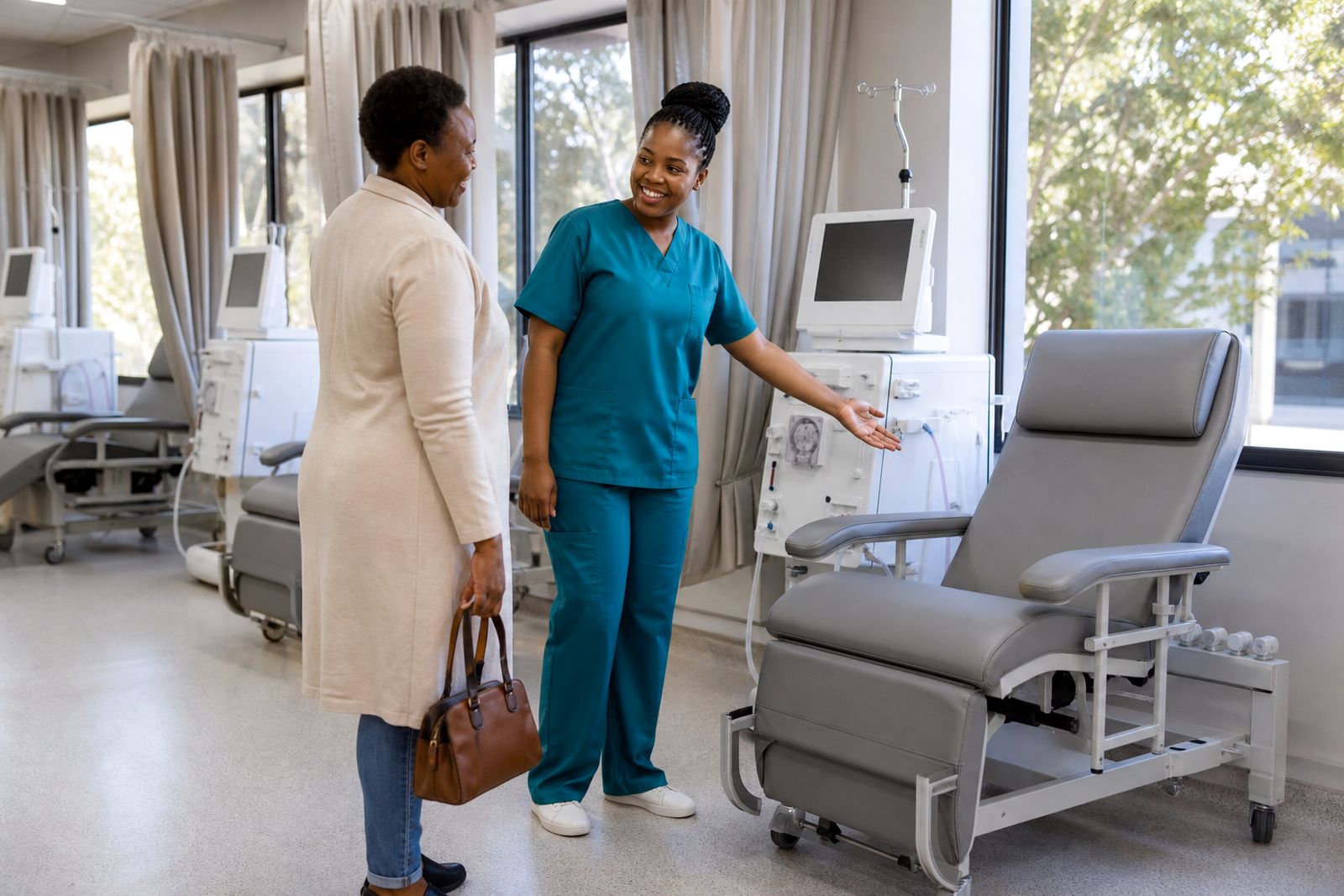
After check-in, the clinical team will settle you into your place for the session and explain the basic flow of the day. On a first visit, this explanation is often more detailed than on later sessions. The aim is to help you know who to speak to, where your belongings should stay and what happens when the shift finishes.
Your care during the session is provided by registered renal nurses under a supervising nephrologist. They will follow the treatment plan and instructions provided through your renal team. The clinic does not set your treatment on its own, and staff will direct medical questions back to the doctor or renal unit responsible for your care where needed.
- You will be shown where to place your bag and personal items.
- The nurse will explain practical points such as call procedures and comfort items.
- If you need the toilet before the session starts, say so early.
- Keep your phone on silent or low volume out of consideration for other patients.
During the session
The first day is often about becoming familiar with the clinic routine. You may notice that the team works in a steady pattern, especially around the start and end of each shift. Nurses monitor patients, record the details required for the session and help with comfort needs where they can. If you need assistance, let the nurse know rather than waiting.
This page is only a practical guide, not treatment advice. Questions about dialysis settings, medicines, diet, fluid intake, outcomes or any symptoms should go to your renal team because they decide on treatment. If you feel unexpectedly unwell before travelling to the clinic or after leaving it, do not rely on a website guide, go to the nearest emergency unit for emergencies.
For comfort, many patients bring a jersey, a book, music or something simple to pass the time. Clinics can feel cooler than expected, and that catches some people on the first day. A quiet routine helps everyone in the room.
After the session and planning the next one
At the end of the session, the team will guide the discharge process for that visit and confirm the practical details for your next booking. If you need regular transport, it helps to keep your pickup arrangements as consistent as possible, especially for busy morning and late-afternoon traffic in Bedfordview and surrounding routes.
If there are account or authorisation questions, these are usually handled through the normal clinic administration process, with medical-aid and private patients both welcome. Bring queries early rather than raising them while you are trying to leave in a hurry. Small admin points are easier to fix when there is time, and it can save stress later.
- Check your next session day and shift before you leave.
- Confirm who your family driver or transport service should contact if plans change.
- Keep referral and account documents together for future visits.
- Use the contact page enquiry form if you need to send a non-urgent question after your visit.
By the second or third visit, most patients find the routine easier to follow. The first session is mainly about getting orientated, meeting the nursing team and making sure the practical side is in order.
What our Outpatient Dialysis customers say
Verified Google reviews
Questions we get asked
How early should I arrive for my first session?
Arrive with a little extra time for first-day check-in and referral checks. Exact timing can vary by shift, so follow the instructions given when your booking is confirmed.
Can a family member come with me on the first day?
A family member may assist with transport and arrival, but practical arrangements can vary on the day. If you need help planning the visit, send your question through the contact page enquiry form beforehand.
What if I have medical questions about my treatment?
Questions about treatment, medicines, diet or symptoms should go to your doctor or renal unit, because your renal team decides on treatment. For emergencies, go to the nearest emergency unit.
Also worth a look


Ask about a referral or a session time
Send a note through our contact form with your name, your referring doctor or renal unit and the shift you prefer, and the clinic team will contact you.
Open the contact form