

Comfort during sessions
Longer dialysis days are easier when the practical details are sorted before you arrive. This page explains the general comfort arrangements at our Bedfordview outpatient haemodialysis clinic and how patients and families can plan ahead.
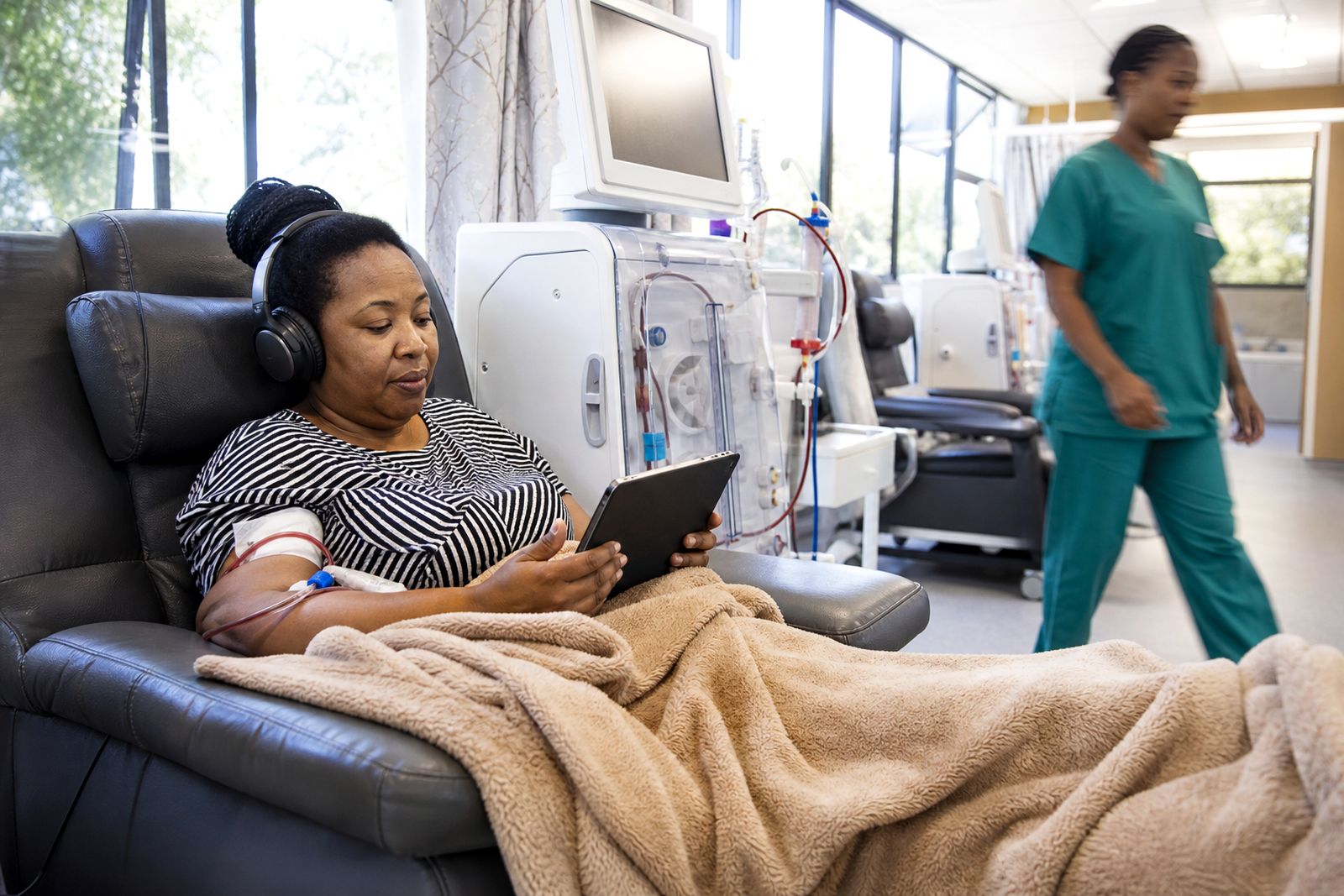
What comfort during sessions includes
Comfort during haemodialysis is usually about routine, preparation and a calm setting rather than anything complicated. At our outpatient clinic in Bedfordview, scheduled chronic dialysis sessions are run by registered renal nurses under a supervising nephrologist, with morning, afternoon and evening shifts available. The care team focuses on helping each patient settle in, get connected for their booked session, and remain as comfortable as possible while the treatment prescribed by their own renal team is carried out.
Comfort support is practical and general. It may include help with getting seated, storing personal items nearby, adjusting small day-to-day details during the session, and making sure the patient knows what to expect on arrival and before leaving. Clinical treatment decisions are not made on this page and always stay with the patient’s own doctor and renal team.
- Booked outpatient sessions in a planned shift
- Support from registered renal nurses on duty
- General guidance on what to bring for comfort
- Routine check-in and settling before treatment starts
- Practical planning for transport, collection and going home
Small things that often help on the day
Patients often tell us that the easiest sessions are the ones where they arrived prepared. Because patients may be seated for a long period, familiar personal items can make a real difference. Clothing should allow easy access for treatment while still being comfortable for the season. In Gauteng, mornings can be chilly and afternoons warm, so layers are often useful.
Families can also help by keeping the day simple. Confirm your lift or collection time, pack only what is needed, and bring items that make waiting feel normal. It sounds basic, but a prepared bag saves stress.
- A light jersey or blanket if you feel cold easily
- Socks, a beanie or other small comfort items in winter
- A book, magazine or fully charged device with earphones
- Your identity document and medical-aid details if relevant
- Your usual essentials such as glasses or a phone charger
Please avoid bringing valuables unless necessary. If you are unsure what is suitable to bring for your own care needs, ask your renal team before the session.
How the session day usually works
Each clinic day follows a set flow so that patients know what is happening and can plan lifts and family support around it. On arrival, the patient checks in and is guided through the normal pre-session routine. The nursing team will help the patient get settled in the treatment area and confirm any essential referral or account information if needed.
Once the patient is ready, the booked treatment proceeds according to the prescription and instructions from the patient’s own doctor or renal unit. During the session, nurses monitor the patient and assist with ordinary comfort needs where appropriate. If a patient is collected after the session, it helps when the driver is ready on time because shift change periods can be busy.
- Arrive in time for your booked shift
- Check in and confirm any required details
- Settle personal belongings safely
- Receive the prescribed dialysis treatment
- Plan collection and travel home after completion
If there is any urgent medical concern before travelling to the clinic or after leaving, emergencies must go to the nearest emergency unit.
What patients and families should prepare
Preparation starts before the car leaves home. New patients join by referral from their own doctor or renal unit, so referral paperwork and account arrangements should be sorted as early as possible. Families can help by checking transport, parking and pick-up plans the day before, especially if travelling from other parts of the East Rand or across Johannesburg traffic in peak hours.
It is also useful to think about comfort in a practical way. Wear loose, comfortable clothing. Bring only what you can keep track of. Eat, drink and manage medicines only according to the instructions from your own renal team, not from general website information. Your treatment plan, medicines, diet and any restrictions are decided by your renal team.
If something has changed since the last session, tell the nurse on arrival so the team can follow the proper clinical process. That keeps communication clear and helps the day run a bit smoother.
Accounts and payment in general terms
We welcome both medical-aid and private patients. The amount billed for outpatient haemodialysis and related clinic charges depends on the patient’s referral pathway, funding arrangement and what has been authorised or agreed in advance. For that reason, this page does not list prices.
In general terms, accounts are handled according to whether the patient is funded by a medical aid or paying privately. Patients or families may be asked for referral information, membership details or other account documents before the first booked session. Private patients may need confirmation of how payment will be handled before treatment dates are finalised.
- Referral details may be needed before booking starts
- Medical-aid patients should provide current membership information
- Private patients should confirm payment arrangements in advance
- Questions about accounts can be sent through the enquiry form on our contact page
For page-specific guidance on referrals and funding, please also see the referral and medical-aid sections on this site.
After the session and getting home
After the session, most patients simply want an organised trip home. It helps when transport is confirmed ahead of time and the person collecting knows the clinic location in Bedfordview well enough to avoid delays at shift handover periods. Patients should take all their belongings with them and follow the advice already given by their own renal team for the rest of the day.
Aftercare instructions are individual and come from the patient’s doctor or renal unit, not from a general information page. If a patient has questions about symptoms, medicines, fluids, food or future treatment changes, those questions should go to the renal team responsible for the treatment plan. For emergencies, go straight to the nearest emergency unit.
Comfort over time usually comes from routine. The same bag, the same travel plan and the same check-in habits can make regular visits feel more manageable for both patients and families.
What our Outpatient Dialysis customers say
Verified Google reviews
Questions we get asked
Can a family member come with me to the clinic?
Family support can be helpful, but visiting arrangements may vary according to clinic flow and patient needs. Check practical arrangements with the clinic through the contact page before the session.
What if I feel unwell before my booked session?
Contact your own renal team for treatment guidance because they decide your care plan. If it is an emergency, go to the nearest emergency unit.
Do you treat walk-in patients?
No. New patients join by referral from their own doctor or renal unit, and bookings are arranged as scheduled outpatient sessions.
Also worth a look



Ask about a referral or a session time
Send a note through our contact form with your name, your referring doctor or renal unit and the shift you prefer, and the clinic team will contact you.
Open the contact form